British Accent Voice for Videos: 3 Proven Creation Methods

If you make videos, you know how much a voice can change perception. A confident British Accent Voice can make tutorial explainers sound authoritative, ads feel premium, and e-learning lessons come across as polished and trustworthy. But getting a natural British Accent Voice is one of those deceptively tricky tasks.
In this guide, we’ll break the problem down clearly and honestly by looking at three practical ways to generate a British Accent Voice for videos—including traditional approaches and a modern AI solution—so you can decide what actually works for your content, budget, and timeline.
Why Many Creators Choose a British Accent Voice for Videos
A British Accent Voice carries cultural associations. For many audiences, a British Accent Voice signals clarity, authority and — sometimes — a touch of prestige. That’s not prejudice; it’s perception. A well-portrayed British Accent Voice can reduce cognitive friction: viewers trust the speaker, comprehension improves, and watch time often follows.
Practical reasons creators love the British Accent Voice:
- Clarity: Many British accent varieties emphasize clear vowel shapes and crisp consonants, which helps non-native listeners follow along.
- Brand positioning: A British Accent Voice can give brand videos an elevated tone without redesigning the whole visual identity.
- Scalability: Once you have a reliable method to produce a consistent British Accent Voice, you can scale episodes, translations and course modules quickly.
How to Create a Natural British Accent Voice
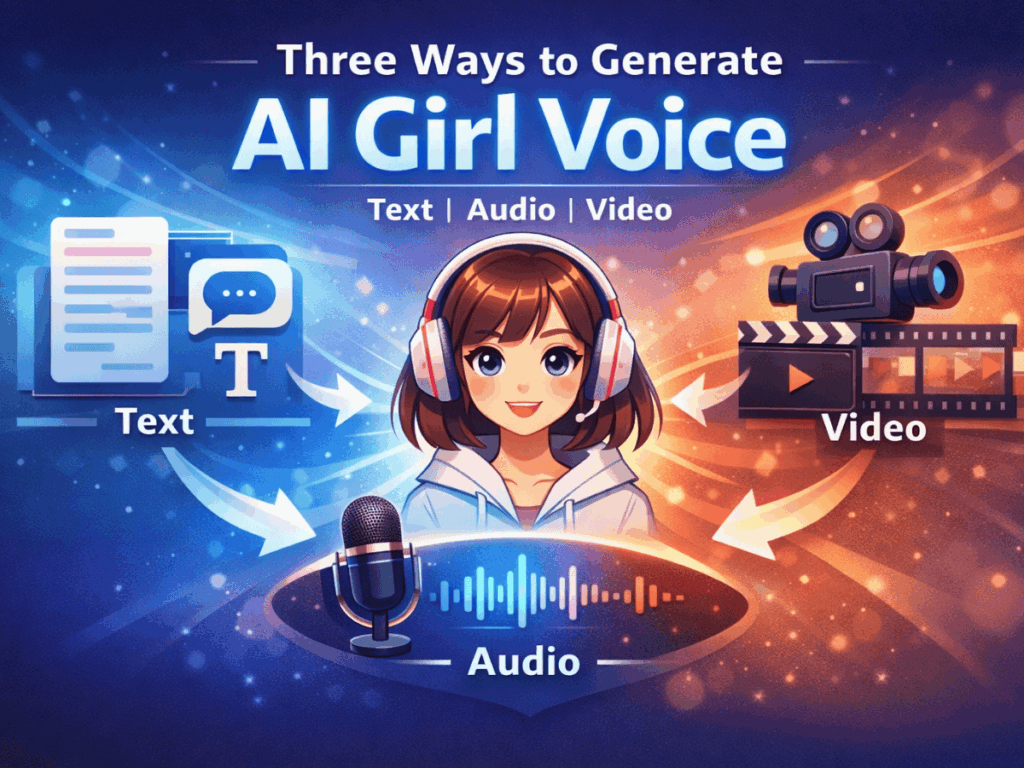
Let’s be candid: making a convincing British Accent Voice that doesn’t sound robotic, stilted, or “off” is surprisingly tricky. There are three common routes creators try .
Method 1: Recording Your Own British Accent Voice
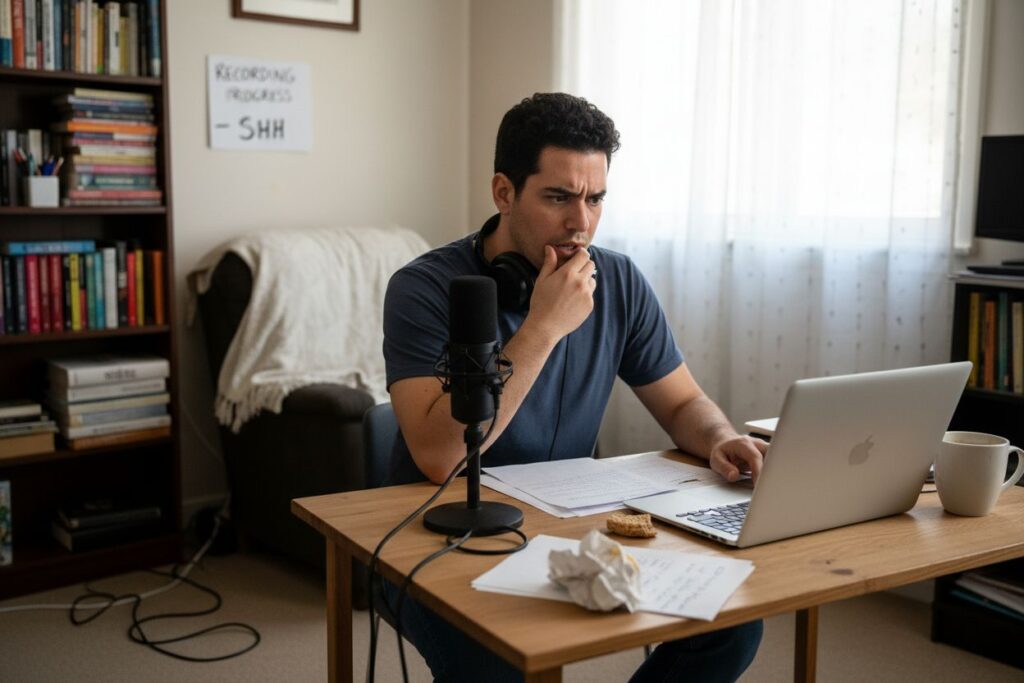
If you’re not a native British speaker, recording your own “British accent” usually leads to one of three outcomes:
- The accent sounds affected — viewers wince at misapplied vowel shifts.
- The voice drifts between accents mid-sentence — which confuses listeners.
- You spend hours rehearsing phonemes instead of creating content.
DIY recording can work if:
- You are a native or near-native British speaker
- You only need one very short video
- Audio quality is not central to the viewer experience
Method 2: Hiring British Voice Actors
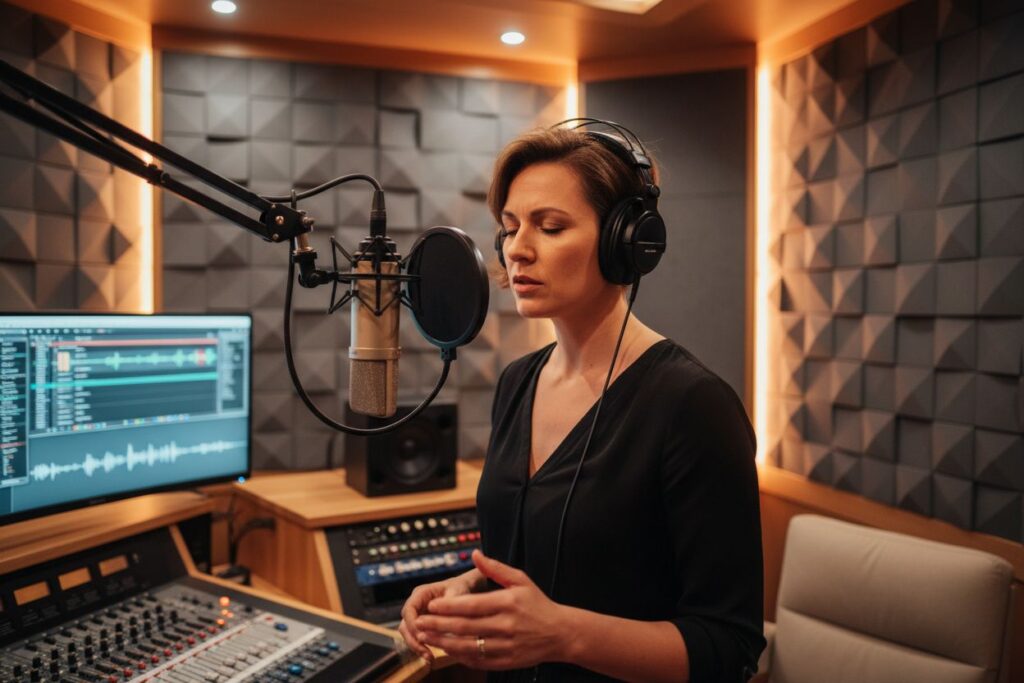
The second traditional option is hiring professional UK voice talent—and from a quality perspective, this does work, The Upside of Hiring Voice Actors:
- Authentic pronunciation and natural delivery
- Strong emotional control and pacing
- Excellent results for high-stakes brand campaigns
For most creators and small teams, the downsides add up quickly:
- A single professional script can cost hundreds of dollars per minute.
- Scheduling, auditions, and revisions add days or weeks to your production timeline.
- Updating scripts or producing frequent content becomes expensive and cumbersome.
The challenge is that creators today publish fast. You might be producing weekly tutorials, daily short-form content, or entire online courses. In that environment, re-recording voiceovers, fixing pronunciation mistakes, or coordinating with voice actors quickly becomes unsustainable. What you really need is not a one-off “perfect” voice, but a repeatable system that produces consistent, natural-sounding British accent narration at scale.
Method 3: Using an AI Accent Generator
This is where modern tools change the equation.
Using an AI-powered British Accent Voice generator, you can produce natural-sounding narration in minutes—without recording equipment, voice talent coordination, or fragmented workflows.Tools like the Accent Generator inside AIDubbing are designed specifically for creators who need speed, consistency, and quality at scale.
Step 1 – Choose an Accent That Fits Your Video
The first decision matters. Choosing the right accent variant influences tone, perceived audience and even the pacing of lines.
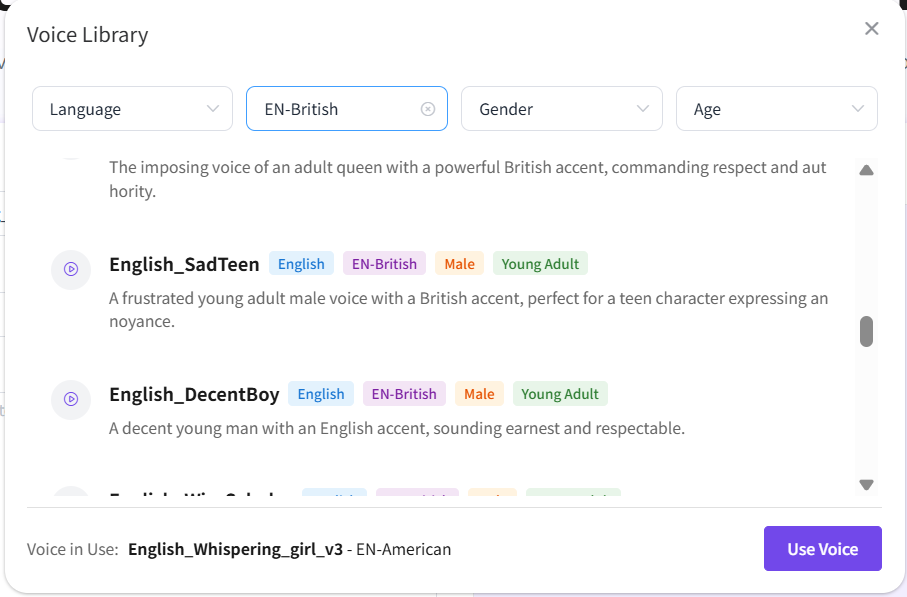
Options commonly available in Accent Generator include: EN-African, EN-American, EN-Australian, EN-British, EN-Indian and Accent Genrator offers voice options for different genders, age groups, and emotional states. For a British accent voice you’ll usually select EN-British.
Step 2 – Enter Your Script or Video Text
Think of your script as audio-first, not text-first. What reads well doesn’t always sound natural. A few script-writing tips that help your British accent voice sound human:
- Write conversationally. Shorter sentences and natural contractions produce better cadence.
- Break long explanations into chunks. Breaks give the voice natural breathing spaces and reduce that “wall of audio” feeling.
If you have a finished video with no script, you can use Video to Text first, correct it, then paste the cleaned script into the generator.
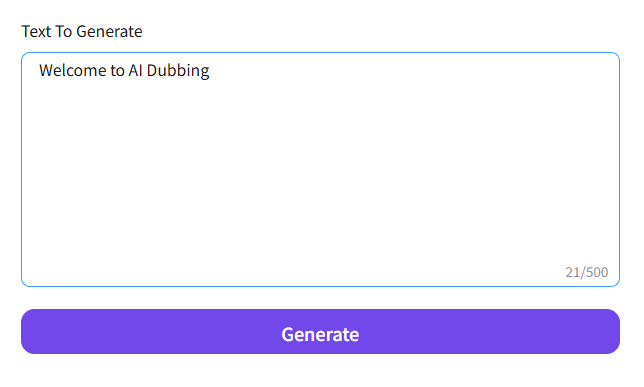
Step 3 – Preview and Export Your British Accent Voice
- Click Generate
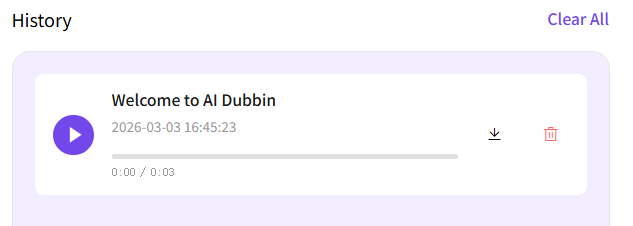
- Listen for stilted delivery, mispronounced names, or awkward pauses.If something’s off, tweak the script and re-generate.
- Once satisfied, batch-generate the whole script and export.
British Accent Voice as Part of a Complete Workflow
In global distribution, voice is not just narration — it’s localization. A British Accent Voice combined with subtitles creates a layered experience: viewers can listen, read, or do both. This redundancy increases comprehension and retention, especially in noisy environments or mobile viewing.
Why combine dubbing with British accent voice:
- Accessibility + engagement: Subtitles boost comprehension; British accent voice ensures the spoken track is crisp and consistent.
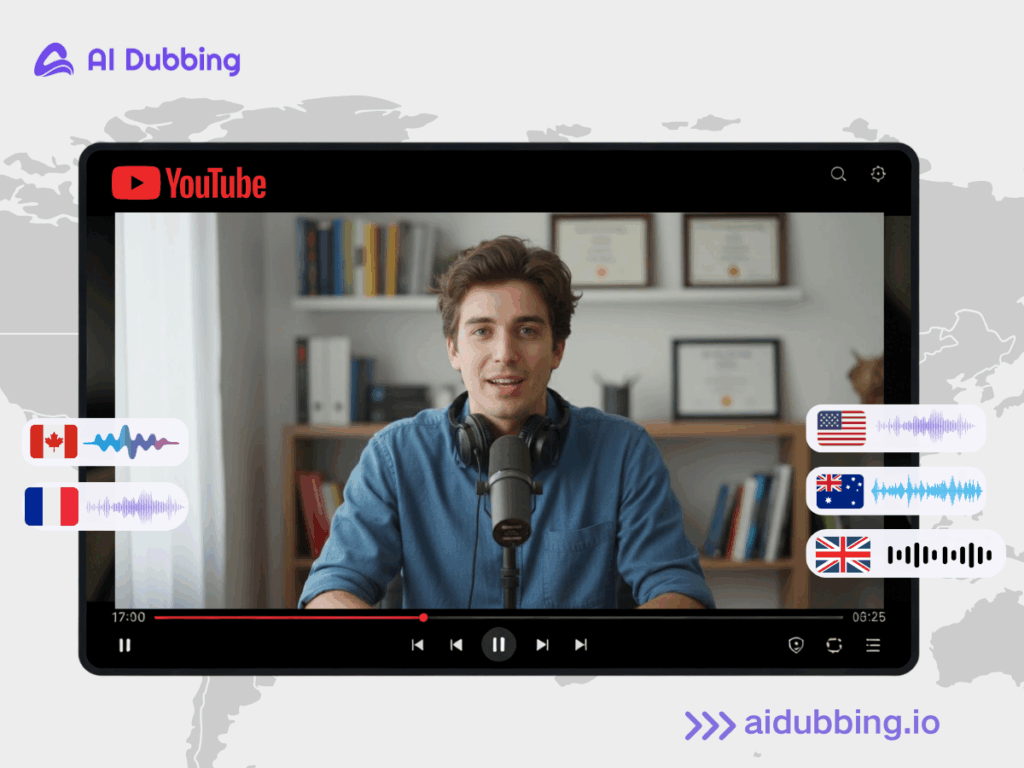
- Multi-language rollouts: Use the same workflow to create EN-British, then other accents for localized markets (EN-American, EN-Australian, EN-Indian, EN-African). This keeps brand tone consistent while respecting regional preferences.
- Faster QA: When audio and subtitles come from the same pipeline, timing mismatches and mistranslations drop dramatically.
Use cases: British accent voice for creators, brands and educators
1. YouTubers & solo creators
Many YouTubers produce strong content but feel their accent or vocal delivery makes videos sound less polished—especially in tutorials and evergreen content aimed at global audiences.
Using a British accent voice helps creators upgrade narration without changing visuals or on-camera presence. A common approach is keeping the original video while replacing the voiceover with a clear, natural British accent voice. This results in smoother pacing, fewer re-takes, and a tone that feels more professional and consistent across uploads.
Creators often use a British accent voice to:
- Re-voice top-performing tutorials to test retention and watch time
- Narrate ads and promo clips with a more international, channel-ready sound
2. Brand marketing & ads
For marketing teams, voice directly affects brand perception. Many brands want a premium, trustworthy tone but can’t justify repeated sessions with British voice actors—especially when ads change frequently.
A British accent voice makes it easier to keep messaging consistent across hero videos, landing pages, and ad variations. Teams can quickly adjust scripts, generate new versions, and maintain the same polished voice without slowing production.
Common uses of a British accent voice include:
- Creating a simple brand voice standard around one British accent voice
- Generating multiple ad versions for fast A/B testing
3. E-learning & educators
In e-learning, clarity and consistency are critical. Learners expect narration that is neutral, easy to follow, and stable across lessons.
A British accent voice is widely used for course narration because it sounds clear and measured. Educators can generate narration for entire courses from scripts using the same British accent voice, ensuring consistency even when lessons are updated later.
Educators typically use a British accent voice to:
- Maintain consistent pronunciation across lessons
- Create a familiar listening experience throughout a course

Final Thoughts
A strong British Accent Voice is less about sounding “British” for the sake of it and more about delivering clarity, credibility, and consistency. With an AI Dubbing platform, you can turn scripts or videos into a natural British Accent Voice in minutes, preview the result instantly, and export ready-to-use audio for tutorials,ads, and e-learning content — without re-recording or hiring voice actors.